Taking Your Blood Pressure Where is your arm?
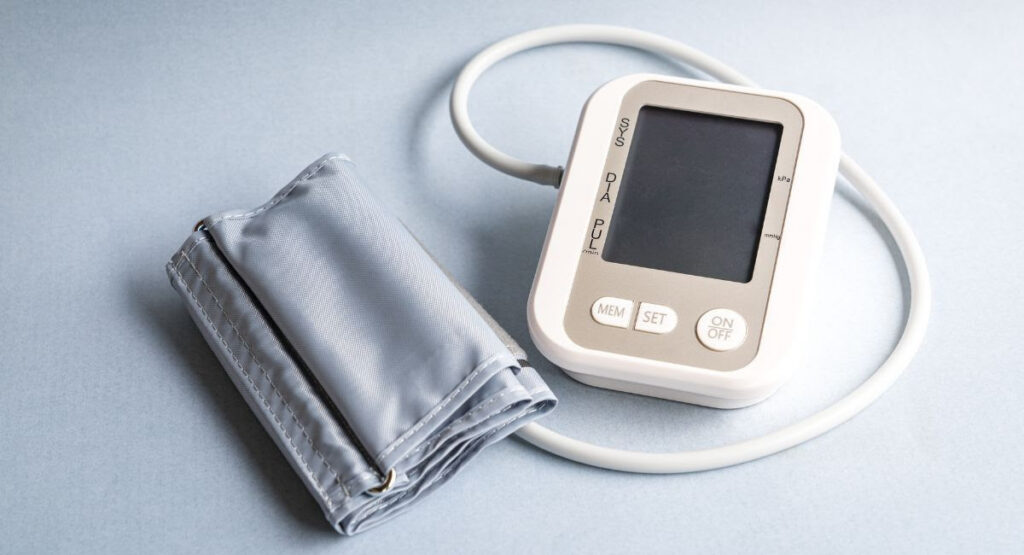
When you’re having your blood pressure measured, make sure your arm is resting on a table.
A note to our patients from someone who recently went through it — Janice
If the arm isn’t properly supported, you’re much more likely to register a false high blood pressure reading, which could trigger a prescription for a course of antihypertensive drugs.
Resting your arm on the lap increased systolic pressure (the top number in a BP reading) by nearly 4 mmHg, while allowing the arm to hang unsupported at the side increased systolic pressure by nearly 7 mmHg, say researchers at Johns Hopkins Bloomberg School of Public Health.
They tested how readings varied when 133 volunteers rested their arm on a desk or in their laps. The position of the arm makes ‘a huge difference’ to the reading, the researchers found, and an accurate reading was possible only when the arm is properly supported, such as when it rests on a desk.
Nearly half of adult Americans have raised blood pressure, a diagnosis made when the measured force of blood flowing through blood vessels is higher than the ‘healthy average’ of 120/80. If left untreated, high blood pressure can increase the risk of heart attack, stroke and other serious cardiovascular problems.
Guidelines for making an accurate blood pressure reading reinforce the researchers’ findings. The back should be supported, and feet placed flat on the floor, while the arm should be supported correctly before a reading is made.
But that’s often what doesn’t happen in the surgery. Patients are often sitting on an exam table with little or no arm support, and sometimes the doctor holds the patient’s arm or has it resting in the lap.
For more information on this topic, click on the WDDTY link below.
Stay Healthy, Janice
Love this article from the magazine What Doctors Don’t Tell You, hope you enjoy.
PEACE OF MIND BEGINS WITH EARLY DETECTION