Superior Body Scan CT
What Your Body Scan Results Really Mean
A note to our patients from someone who recently went through it — Janice
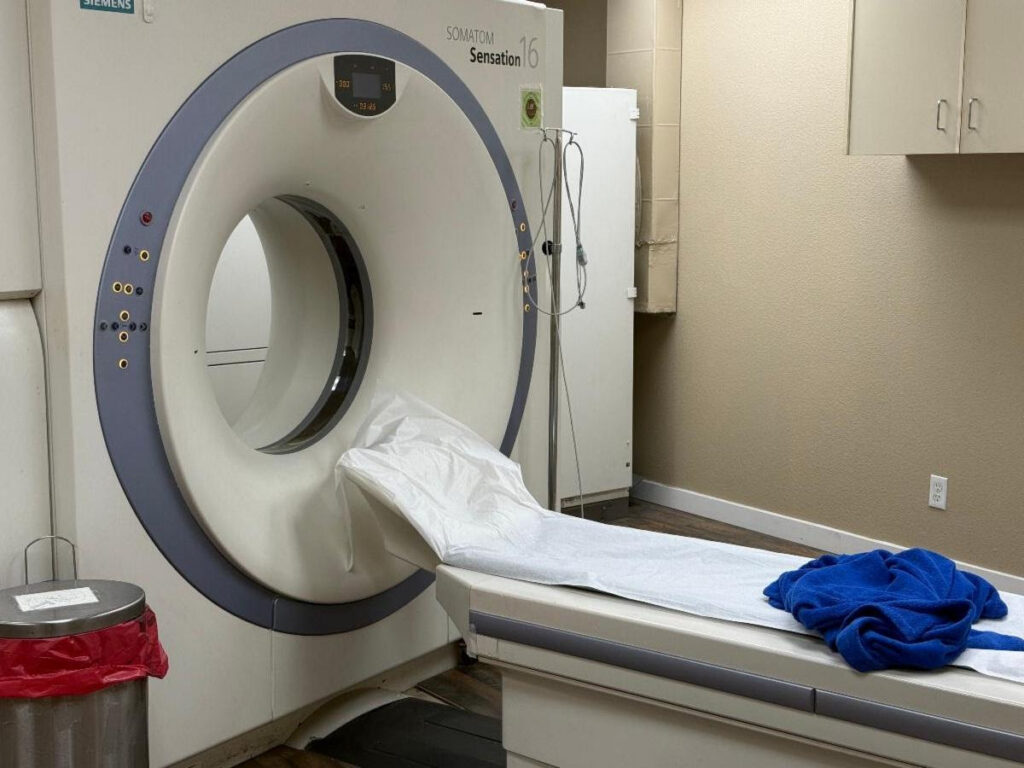
I recently went through the same screening many of you are considering — a heart and a full body scan at Superior Body Scan with Dr. Patel (in Fullerton). I wanted to share a few things I learned along the way, because I think they’ll help you get more out of your own results and set the right expectations before you go in (cash price $625.00).
The information is valuable — but it rarely stands alone
The first thing I’d tell you is that these reports are genuinely useful — but almost none of the findings inside them tell the full story by themselves. A scan produces a detailed list of observations, each written in careful, cautious medical language. On their own, most of these findings can’t tell you how serious or how urgent they really are. They are a starting point for your doctor, not a final verdict.
Example: the heart calcium score
My own report is a good example of this. The heart scan calculates a coronary calcium score — a single number describing how much hardened plaque has built up in the heart’s arteries. It’s an important number, but by itself, it does not tell you how dangerous your particular situation is. Understanding that usually takes more information: how your score compares to others your age, what your cholesterol and blood pressure look like, and in many cases, additional imaging — such as an MRI or a CT angiogram — before your doctor can say with confidence how concerning a finding truly is. The score points you toward the right next test; it isn’t the answer on its own.
Your first scan has nothing to compare itself to
There’s a second thing worth knowing going in: if this is your first scan, there is no earlier scan to measure it against. That matters more than it might seem. A lot of what makes a finding worth watching — or not — is whether it’s changing over time: growing, shrinking, or staying exactly the same. A first scan simply can’t answer that question yet, because there’s nothing to compare it to.
A couple of quick takeaways
- A finding on your report is a signal, not a diagnosis — it tells your doctor where to look next, not necessarily how worried to be.
- Some findings, like a calcium score, may call for further testing (such as an MRI or CT angiogram) before anyone can say how significant they are.
- On a first scan, there’s no baseline for comparison — a follow-up scan is often what turns a single result into something meaningful.
The bottom line
None of this means the scan isn’t worth doing — quite the opposite. It’s a genuinely valuable tool for catching things early, often well before you’d ever feel a symptom. But go in with the right expectations: you may come away with new information that sounds unfamiliar, or even a little alarming, on the page. That’s normal.
Bring your questions to your follow-up appointment, ask what each finding actually means for you specifically, and avoid trying to interpret any single number in isolation. For more information call: (714) 871-6161
For more information on this topic, click on the WDDTY link below.
Stay Healthy, Janice
Love this article from the magazine What Doctors Don’t Tell You, hope you enjoy.
For more information on this topic, click on the WDDTY link below.
Stay Healthy, Janice
Love this article from the magazine What Doctors Don’t Tell You, hope you enjoy.
PEACE OF MIND BEGINS WITH EARLY DETECTION